


AI TRANSFORMATION
AI IS MAKING GTM FASTER. THE ADVANTAGE WILL COME FROM RELEVANCE.
AI is connecting customer evidence, buying signals and sales workflows faster than ever. But as speed becomes easier to access, the advantage shifts to knowing who matters, why now matters and where human judgement still matters most.
7 min read | 14 September 2026
What the event showed
We recently joined around 100 sales and GTM professionals at Pitstop’s AI GTM Lab in Dublin Across presentations from Sarah McDevitt, James Flynn, Scott Sampson, Kevin Foley, Mark Colgan and the Pitstop team, the striking thing wasn’t any single AI tool. It was how quickly activities that previously sat across disconnected systems and manual processes are being joined together.
Customer data. ICP definition. External signals. Account research. Qualification. Prioritisation. Next-best actions. Conversation intelligence. AI is starting to connect these into usable commercial workflows. That can make GTM significantly faster. But it also raises a more interesting strategic question.
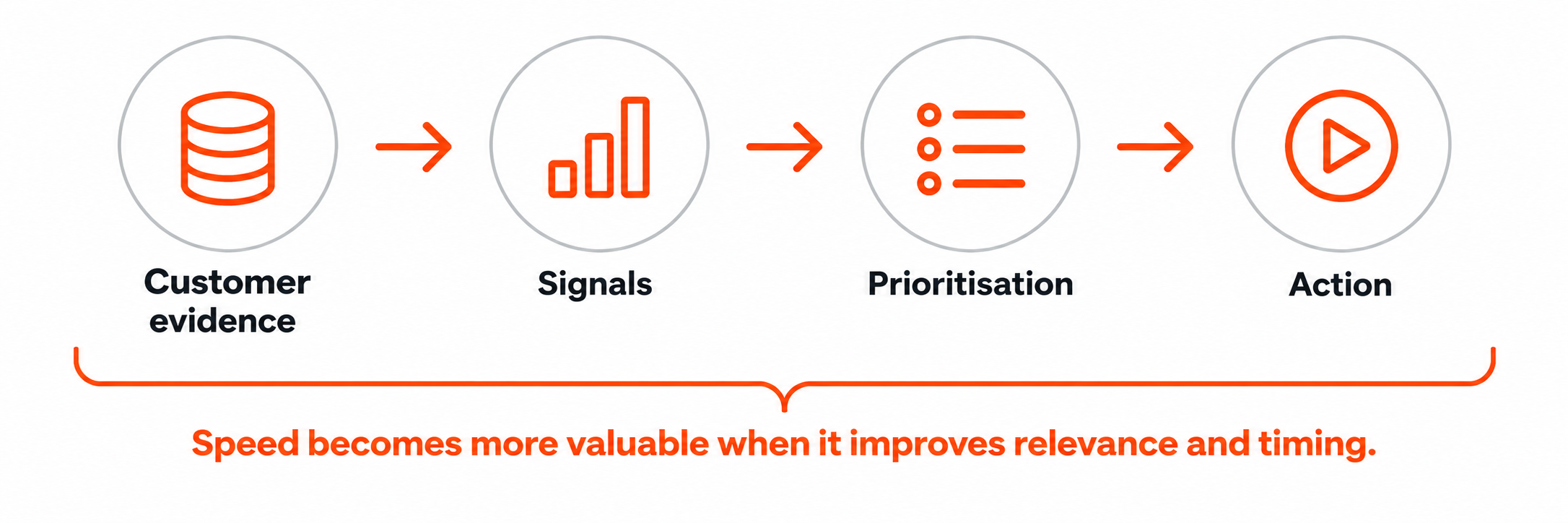
If every sales team gets faster, where does the advantage come from?
Start with what your customers have already told you.
One of the clearest starting points came from James Flynn: mine your own customer data.
Before asking AI to generate more prospects, start with the evidence already inside the business = CRM history, call transcripts, email interactions, firmographics, product usage and other observed behaviour.
Understand the customers you already win. Identify what characterises the best of them. Then use that evidence to find organisations that look similar.
But similarity only gets you so far.
External and behavioural signals add another layer. They help move the question from simply identifying companies that fit an ICP towards understanding whether something is happening that makes a conversation relevant now.
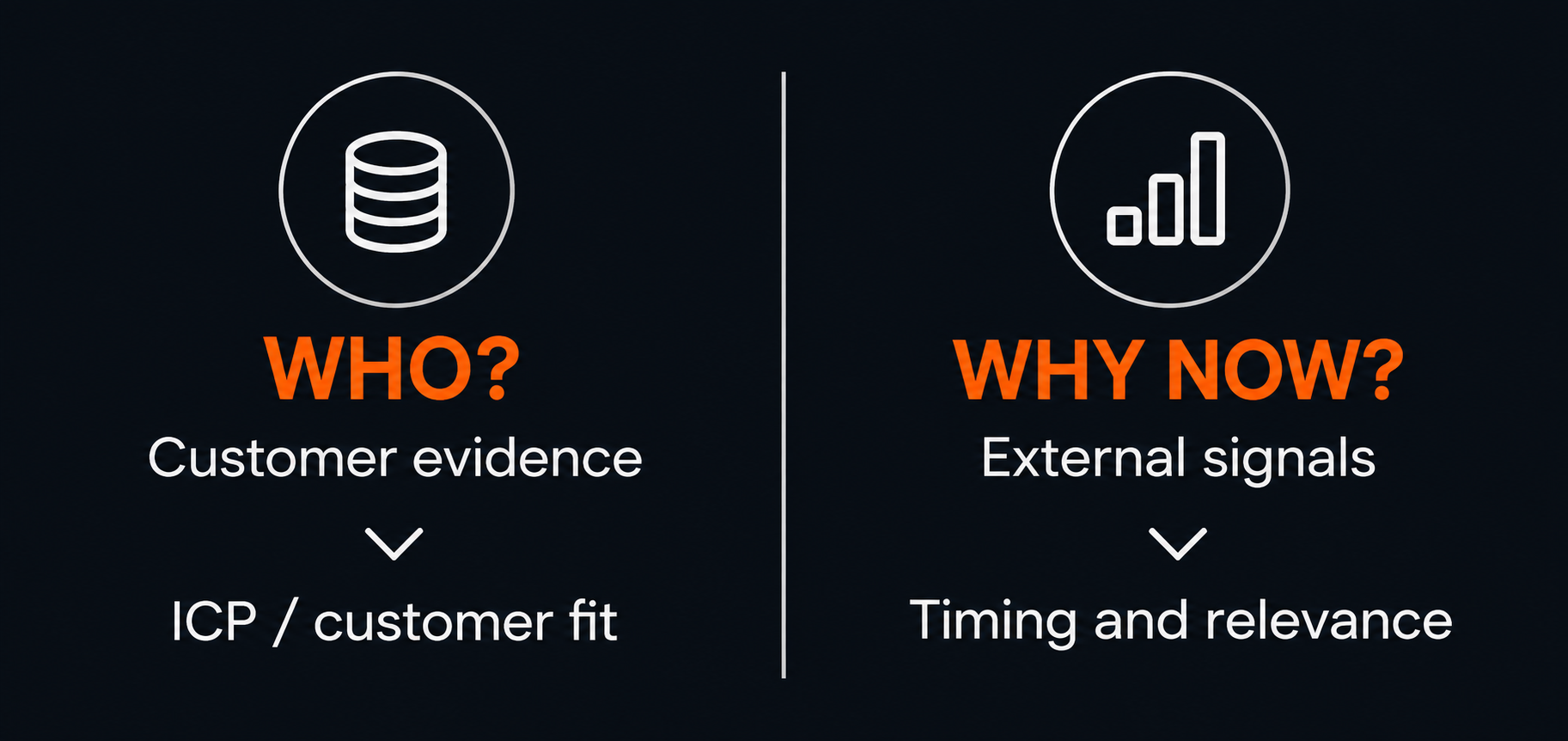
Fit tells you who. Signals help tell you when.
Better AI should improve the decision, not just increase the output.
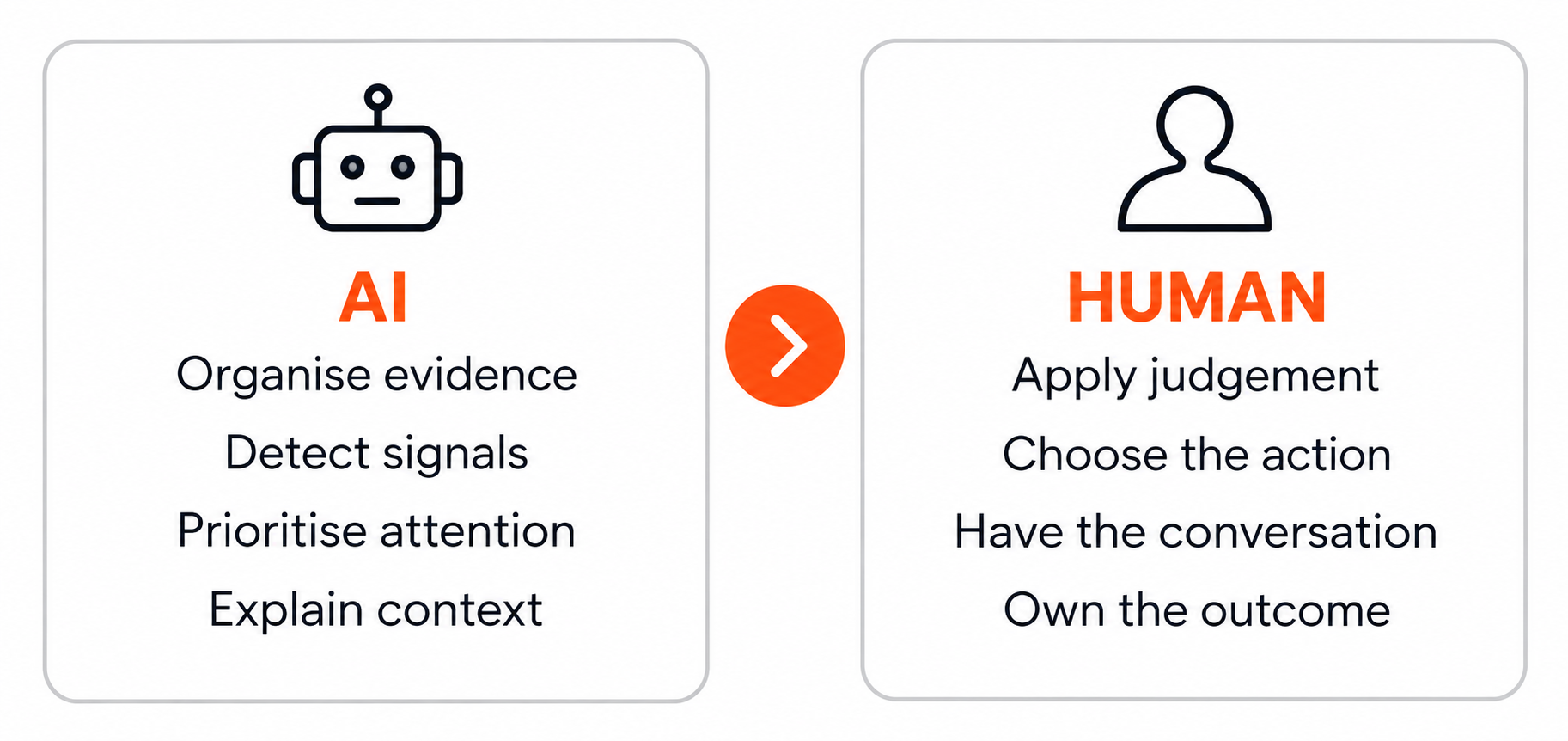
The goal isn’t more automated activity. It’s better-informed action.
Scott Sampson challenged the idea that the main purpose of AI in GTM is simply to accelerate activity.
His principle was straightforward: “Let AI organise the evidence. Let the seller own the decision.”That distinction matters.
More signals do not automatically create better decisions. Too many can create noise. CRM opinion can be mistaken for evidence. Fixed sales plays can become outdated.
The useful role for AI is to assemble evidence, detect meaningful change, rank what deserves attention and explain why.
The salesperson remains responsible for deciding what to do with that information - applying judgement, understanding the customer and choosing the right action.
The real value comes from connecting the system.
Customer and CRM evidence provide context. External data helps identify relevant accounts and contacts. AI supports research and qualification. Conversation intelligence feeds new evidence back into the system. Sellers and leaders can then act on that connected context.
The significance isn’t any individual tool.
It’s the loop.
Instead of salespeople manually stitching together information from multiple systems, evidence can increasingly move through the commercial process with them.
That creates a much more useful question than simply asking who fits the target profile:
Why might this be the right time to talk?
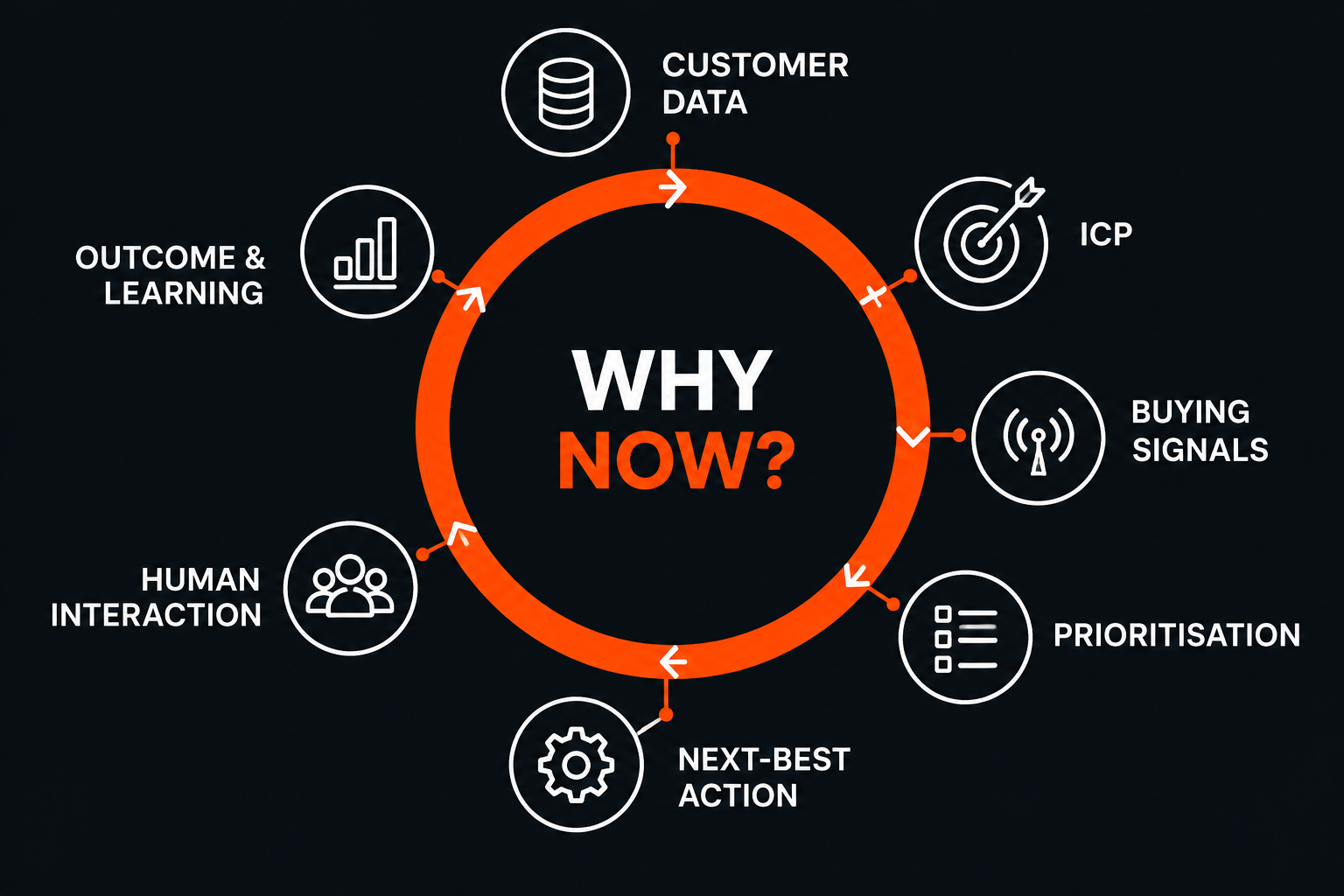
The more connected your evidence, the easier it is to see why now might be the right time to talk.
AI could make human selling more effective
One of the more counterintuitive ideas from the evening was that AI could make traditional sales channels more effective - including the telephone.
Not because AI makes the call.
Because it can help the salesperson understand:
Who should I contact?
Why might they care?
Why now?
Better preparation and timing can make the human interaction more relevant.

As automation becomes common, being human becomes more valuable.
Sarah McDevitt provided the important counterweight to the evening’s technology.
Her argument was that AI will make GTM faster, while humans will make it matter.
Her framework contrasted “Ruthless Automation” - fast and scalable, but potentially hollow - with an approach where AI capability and strong human relationships amplify one another.
Her closing point captured the challenge: “You can’t automate your way to loyalty.”
If competitors increasingly have access to the same models, similar data sources and similar automated workflows, technology alone cannot sustain differentiation.
Trust, judgement, empathy, presence and customer understanding become more important, not less.
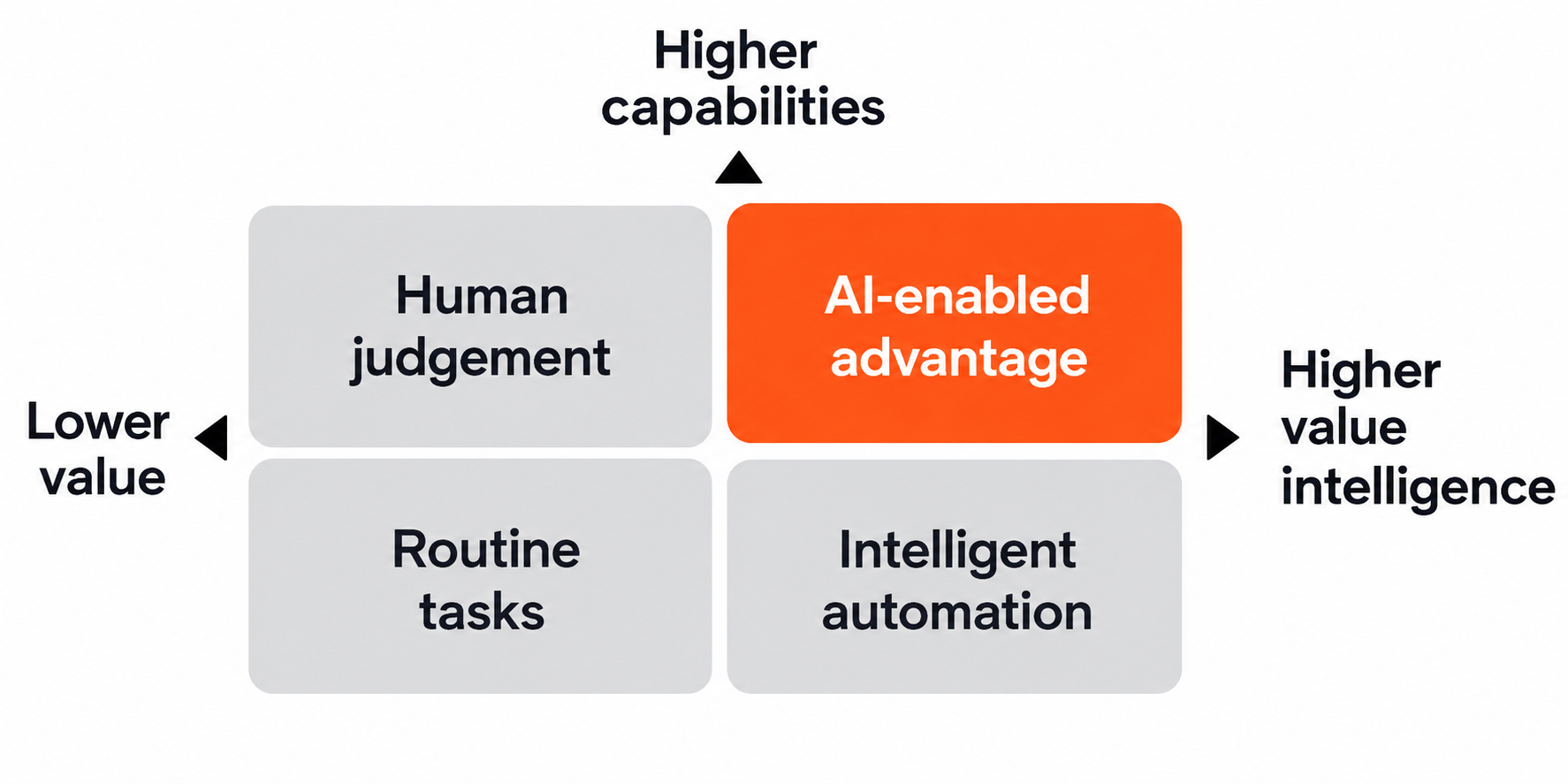
Automation creates scale. Human connection creates distinction.
More AI does not automatically mean better GTM.
The opportunity isn’t simply to automate more sales activity.
It’s to shorten the distance between understanding the customer, recognising a meaningful commercial signal and taking the right action.
That requires more than technology.It requires understanding what is happening commercially, deciding where the greatest opportunity lies and then applying technology where it can genuinely improve execution.
That is how we think about transformation at DMT.
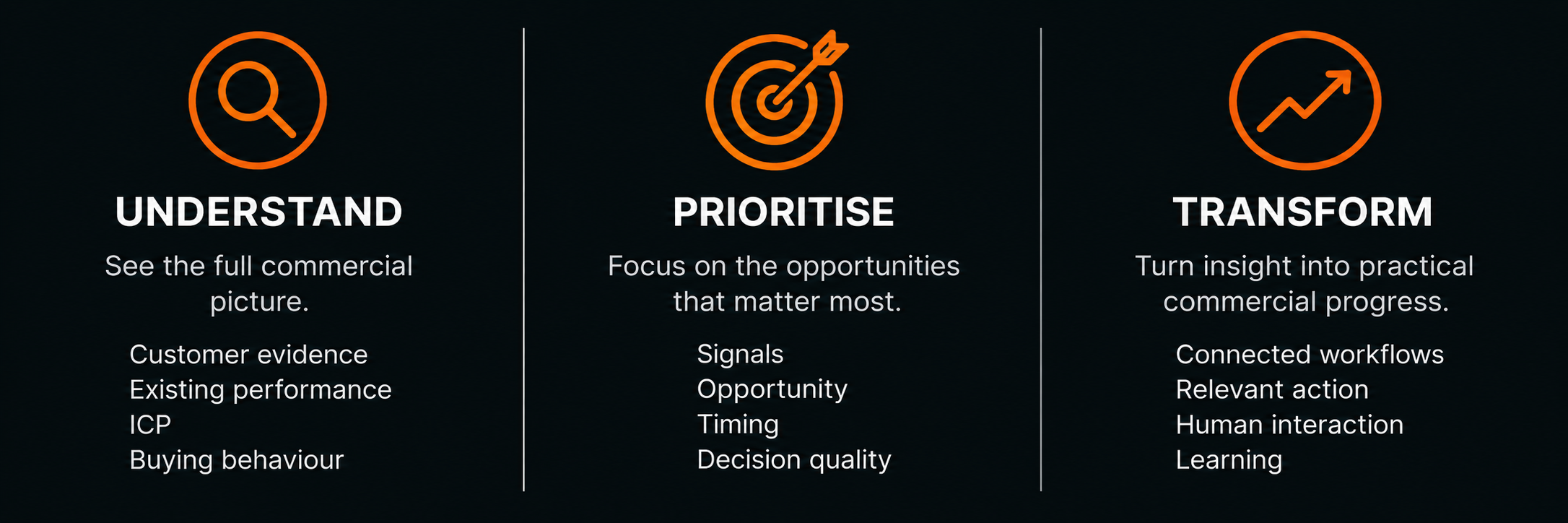
The advantage isn’t having AI.
AI-enabled GTM capability is becoming increasingly accessible.
Customer research can be automated. Accounts can be enriched. Signals can be monitored. Prospects can be prioritised. Next actions can be suggested.
Those capabilities will increasingly become normal.
So simply adopting AI is unlikely to provide a durable advantage.
The advantage comes from how well a business connects its own customer evidence, external signals and human judgement.
Knowing who matters. Understanding why now matters. And making a better decision about what happens next.
The emerging GTM advantage won’t come from generating more activity.
It will come from recognising the right opportunity - and acting at the right moment.
Continue the conversation
If you’re exploring how AI could improve your GTM or commercial growth model, rather than simply add more automation, I’d be interested to hear what you’re seeing.